Ready-to-Use Resources from BRIDGE-CPT
Click the links below to download each of our six free resources about communication, co-designed by autistic youth, people close to autistic youth, and speech-language pathologists.
Who can use these resources?
Anyone! Autistic youth can use them to explore various communication topics and get ideas for how others can support them. Parents, siblings, friends, teachers, therapists, or other people can fill them out with autistic youth to improve their own understanding and provide support.
Accessibility note: Some documents on this page are not yet fully accessible. We are actively working to remediate these files and improve access for all users.
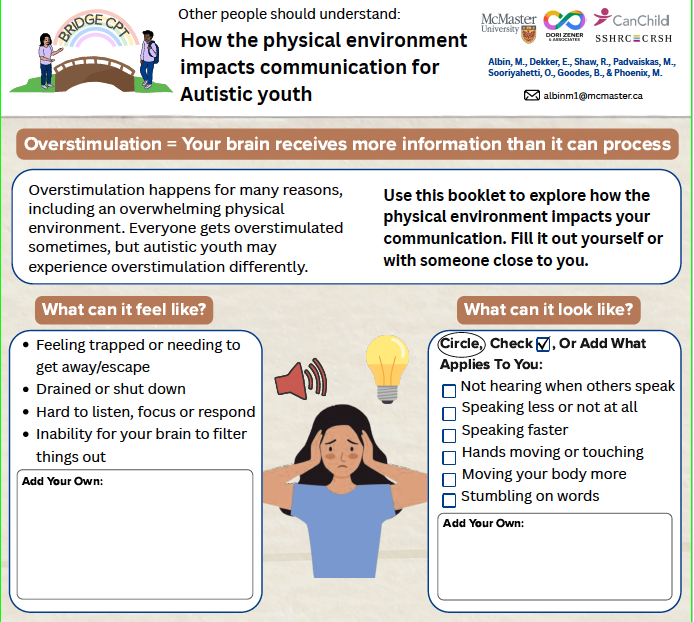
How the physical environment impacts communication: An infographic
Fill this booklet out on your own or with someone you trust. Circle/write what overstimulation looks like for you, what others can do to help, and what helps you in the moment.
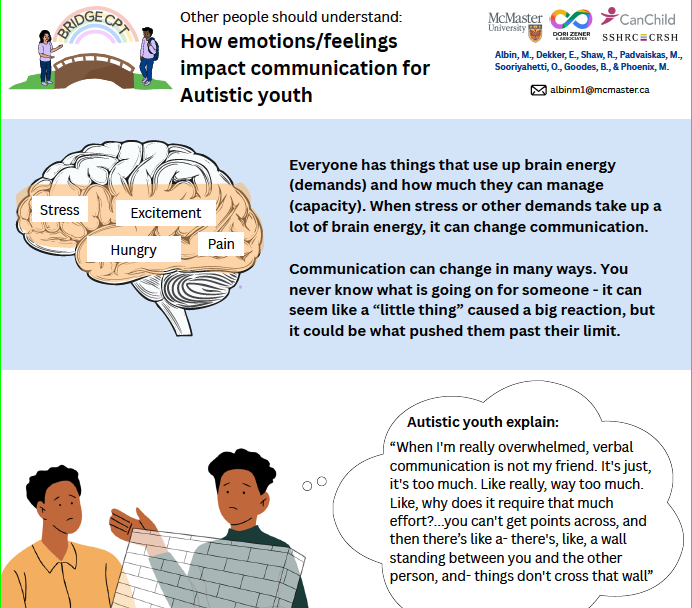
How emotions/feelings impact communication: An infographic
Fill this booklet out on your own or with someone you trust. Circle/write how communication changes when you feel strong emotions, what helps you in the moment, what other people can do to help.
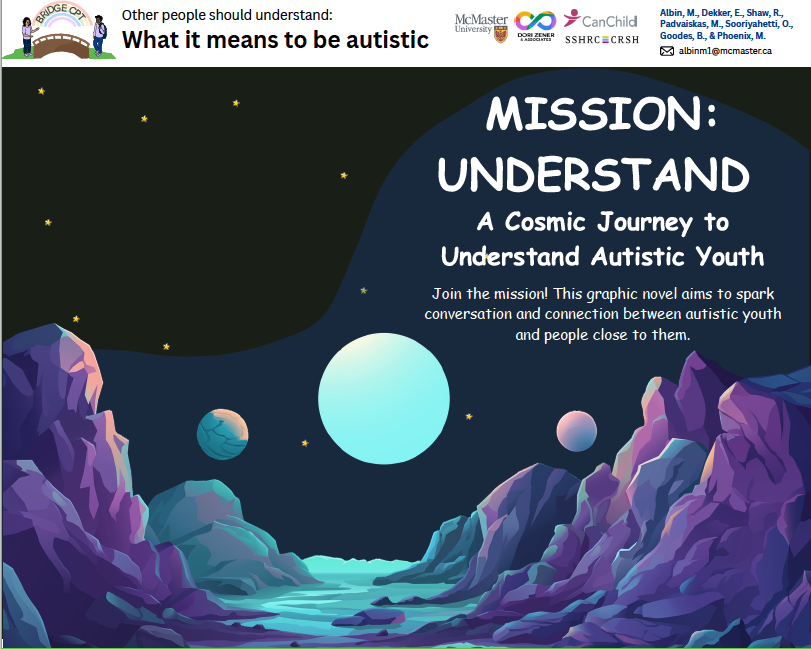
What it means to be autistic: A brief graphic novel
Follow Blip, our non-autistic main character, as they travel to planet NeurisDiversica and learn what it means to be autistic. Through Blip’s adventures, you’ll learn about autistic experiences and how to be an ally to autistic youth.
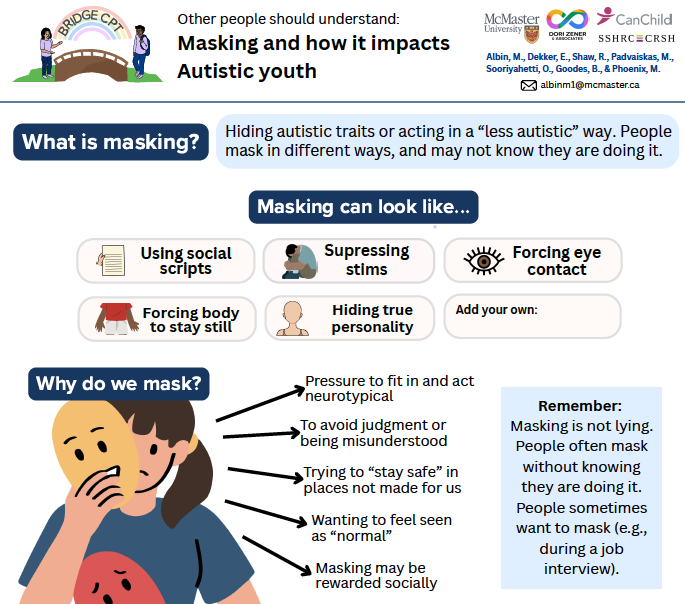
Masking and how it impacts autistic youth: An infographic
Explore masking, including how it impacts autistic youth, and why people mask. Autistic youth can talk about what masking looks like for them and how others can make it safer to unmask.
Non-spoken communication options for autistic youth: An AAC booklet
This booklet can help you communicate when speech is hard to access. Fill it out on your own or with someone you trust, including how you feel, what you need, how others can help, and more.
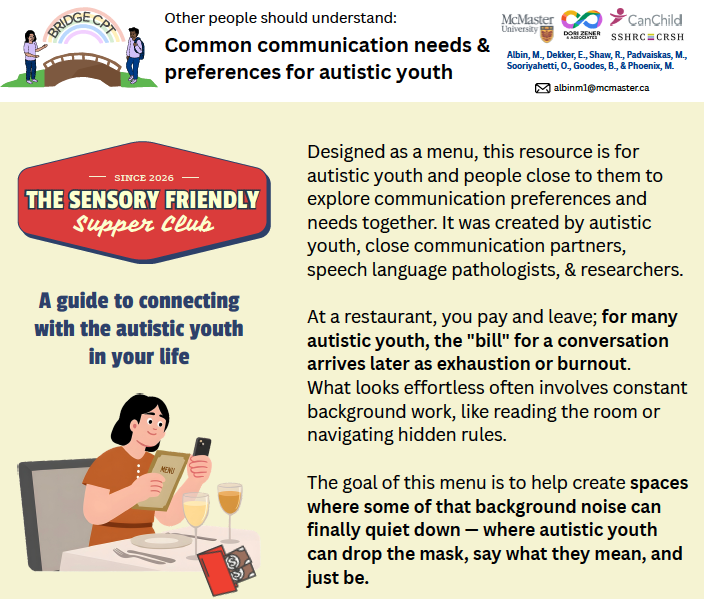
Common communication preferences and needs for autistic youth: A menu
Use this “menu” to explore different communication choices, and which are more “expensive” for autistic youth, and which can be helpful. Fill it out on your own or with someone you trust.