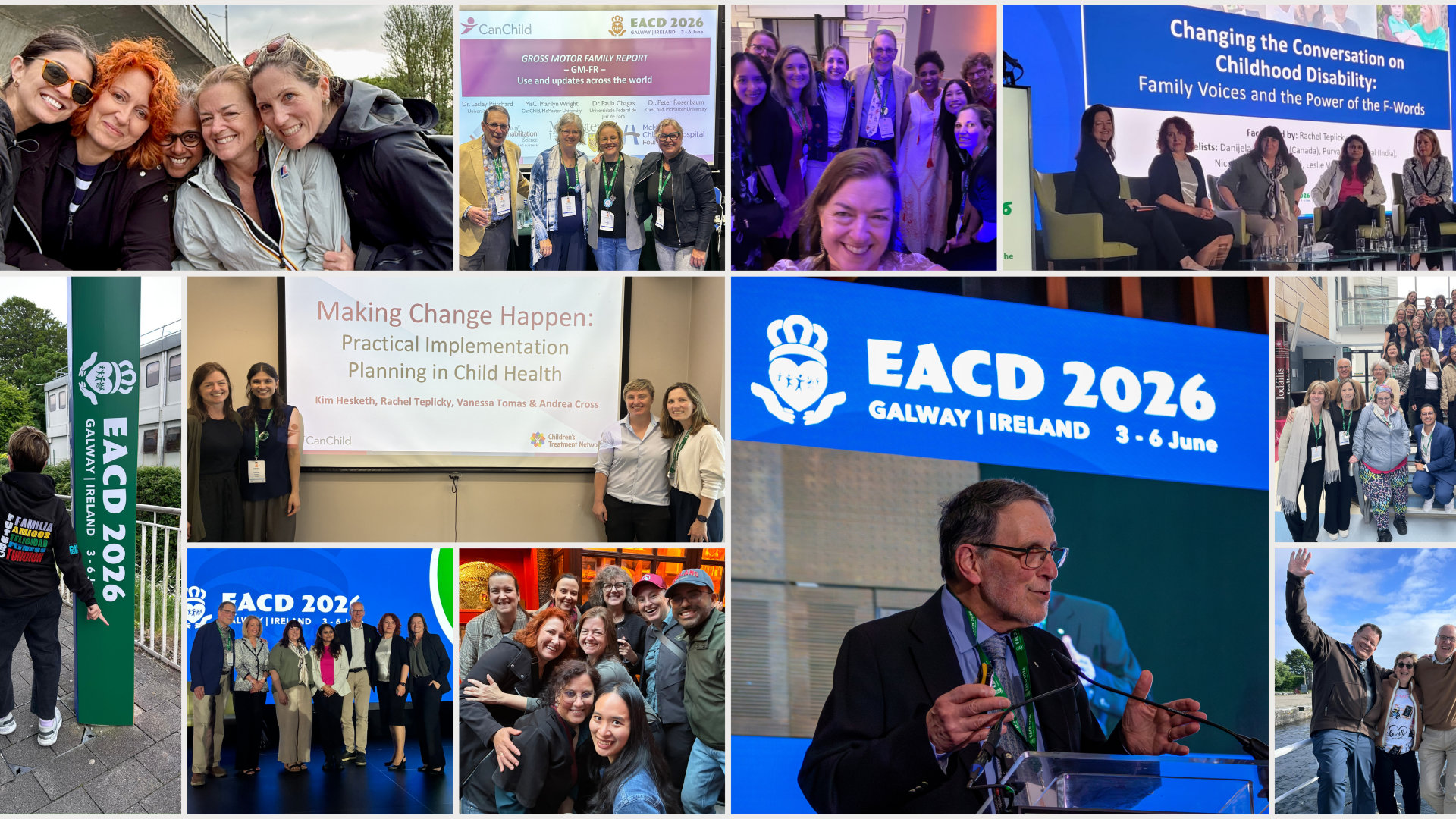
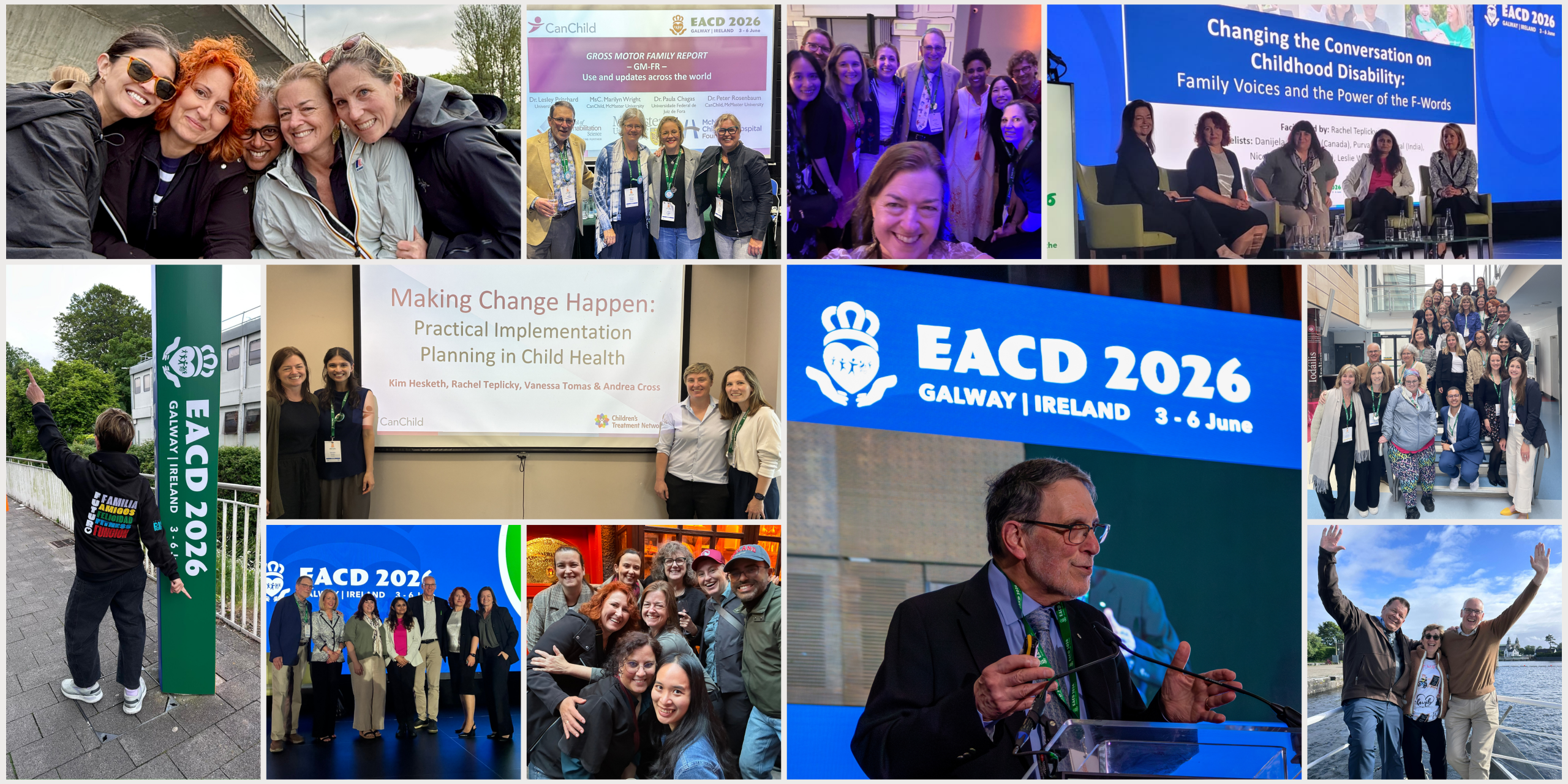
CanChild researchers, trainees, clinicians, family partners, and collaborators made a remarkable impact at the 38th Annual Meeting of the European Academy of Childhood-onset Disability (EACD) Congress in Galway, Ireland, contributing to more than 50 presentations across four days and shaping international conversations on childhood disability, participation, health, and inclusion.
This year’s Congress focused on disability and health through a holistic, lifespan lens, placing the voices of people with childhood-onset disabilities and their families at the centre of research, practice, and policy.
Notably, the Congress adopted CanChild’s internationally recognized F-words for Child Development: Functioning, Family, Fitness, Fun, Friends, and Future, as its organizing framework. Based on the 2011 published paper by CanChild’s Co-Founder, Dr. Peter Rosenbaum and former CanChild director, Dr. Jan Willem Gorter, this framework offers a strengths-based approach to childhood disability that shifts the focus from a medical model of “fixing” a child to a holistic approach emphasizing six core, interconnected domains of growth.
Across the Congress, CanChild researchers and partners contributed:
- 53 presentations across four days
- 31 parallel sessions spanning instructional courses, mini-symposia, oral communications, and scientific/technology poster pitches
- 18 poster presentations
- 4 flagship sessions, including:
- 2 keynote presentations
- 1 full-day pre-congress course
- 1 formal session
- With contributions from more than 30 CanChild researchers and partners
The Congress opened with a keynote by Dr. Peter Rosenbaum, highlighting the evolution of childhood disability research and the global impact of strengths-based, family-centred approaches such as the F-words framework.
Researchers and partners shared work spanning participation, implementation science, family engagement, co-design, trauma- and violence-informed care, disability policy, health equity, and youth engagement in research. Together, these presentations demonstrated CanChild’s huge breadth and its commitment to meaningful, collaborative research grounded in the priorities of children, youth, and families.
CanChild’s impact extended beyond its own presentations. CanChild researchers authored 13 of the highest-ranking 250 oral and poster presentation abstracts featured in the Congress’s “best abstracts” supplement (Developmental Medicine & Child Neurology, Mac Keith Press). In addition, CanChild-developed tools and frameworks were used or referenced in 28 abstracts, with more than 80% of these coming from research groups outside CanChild. CanChild is the most represented dedicated childhood-disability research centre in the supplement, and records the highest count of any single institution.
Across the Congress, CanChild’s work and influence were evident well beyond Canada. Through research, education, partnership, and knowledge translation, CanChild continues to contribute to a growing international movement that promotes participation, inclusion, and flourishing for children and youth with disabilities and their families.